Category Archives: General discussion

Anything else.

Work it

Fig.1 Lazy Government Workers

Rogers Ailes, head of Fox News, seems to think that government work makes you lazy (via TPM):

Obama’s the one who never worked a day in his life,” Ailes said in Zev Chafets’ book “Roger Ailes: Off Camera.” “He never earned a penny that wasn’t public money. How many fundraisers does he attend every week? How often does he play basketball and golf? I wish I had that kind of time. He’s lazy, but the media won’t report that.”

And this guy is some kind of evil genius.

A sad repost

Fig. 1: Pocket ChangeIt’s the anniversary of the Iraq War.  If anything, this war ought to teach us that arguments have consequences.  Here is the most recent assessment (according to a recent study):

(Reuters) – The U.S. war in Iraq has cost $1.7 trillion with an additional $490 billion in benefits owed to war veterans, expenses that could grow to more than $6 trillion over the next four decades counting interest, a study released on Thursday said.

The war has killed at least 134,000 Iraqi civilians and may have contributed to the deaths of as many as four times that number, according to the Costs of War Project by the Watson Institute for International Studies at Brown University.

When security forces, insurgents, journalists and humanitarian workers were included, the war’s death toll rose to an estimated 176,000 to 189,000, the study said.

The report, the work of about 30 academics and experts, was published in advance of the 10th anniversary of the U.S.-led invasion of Iraq on March 19, 2003.

Now for some self-plagiarism.  Every now and then I return to Robert Samuelson estimate of the cost of war in Iraq.  At the time, he called it “pocket change.”  He should be reminded of this assessment every single day of his life.  But alas, judging by the columns he has penned since then, he is unaware.   Let’s at least remind ourselves.  Here comes the repost:

For a while–for those who remember–Samuelson been poo-pooing Obama’s “self-indulgence” on health insurance reform.  A more competent rhetorical analyst, by the way, might have fun with the way he always goes ad hominem on Obama–treating his own impoverished and uncharitable image of Obama rather than Obama’s stated positions (he even admitted once that this was his own problem).  But it’s worthwhile to poke fun at Samuelson’s priorities.  Way back before we spent 700 plus billion dollars in Iraq, chasing what turned out to be an easily uncovered deception, here is what Samuelon wrote:

A possible war with Iraq raises many unknowns, but “can we afford it?” is not one of them. People inevitably ask that question, forgetting that the United States has become so wealthy it can wage war almost with pocket change. A war with Iraq would probably cost less than 1 percent of national income (gross domestic product). Americans have grown accustomed to fighting with little economic upset and sacrifice.

Pocket change.  In reflecting on this piece (called “A War We Can Afford”) Samuelson wrote:

Yes, that column made big mistakes. The war has cost far more than I (or almost anyone) anticipated. Still, I defend the column’s central thesis, which remains relevant today: Budget costs should not shape our Iraq policy. Frankly, I don’t know what we should do now. But in considering the various proposals — President Bush’s “surge,” fewer troops or redeployment of those already there — the costs should be a footnote. We ought to focus mostly on what’s best for America’s security.

When it comes things that are actually real, on the other hand, Samuelson is skeptical:

When historians recount the momentous events of recent weeks, they will note a curious coincidence. On March 15, Moody’s Investors Service — the bond rating agency — published a paper warning that the exploding U.S. government debt could cause a downgrade of Treasury bonds. Just six days later, the House of Representatives passed President Obama’s health-care legislation costing $900 billion or so over a decade and worsening an already-bleak budget outlook.

900 billion?  That figure is almost exactly what we’ve spent in seven years of war.  Weird.  But this time cost is all that matters.

Imagine something costing only 900 billion over a decade and killing zero people.

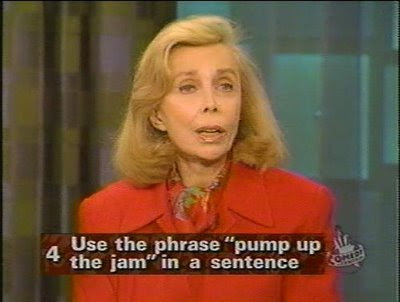
Pump up the jam, pump it up

Fig.1: Pump it up.

Timorous airline passenger and Fox News alleged liberal Juan Williams has admitted to making one of his weekly columns an undergraduate copy paste job.  According to Salon‘s Alex Seitz-Wald:

In a case of apparent plagiarism, Fox News pundit Juan Williams lifted — sometimes word for word — from a Center for American Progress report, without ever attributing the information, for a column he wrote last month for the Hill newspaper.

Almost two weeks after publication, the column was quietly revised online, with many of the sections rewritten or put in quotation marks, and this time citing the CAP report. It also included an editor’s note that read: “This column was revised on March 2, 2013, to include previously-omitted attribution to the Center for American Progress.”

But that editor’s note mentions only the attribution problem, and not the nearly identical wording that was also fixed.

The really strange thing about this case is what it reveals about the writing and thinking process of the two-million dollar a year Fox News pundit:

In a phone interview Thursday evening, Williams pinned the blame on a researcher who he described as a “young man.”

“I was writing a column about the immigration debate and had my researcher look around to see what data existed to pump up this argument and he sent back what I thought were his words and summaries of the data,” Williams told Salon. “I had never seen the CAP report myself, so I didn’t know that the young man had in fact not summarized the data but had taken some of the language from the CAP report.”

Two things.  First, he has an assistant?  I’ve always suspected assistants were behind the obscure factoids and misleading statistics in George Will’s work (full disclosure–someone, I’ll find out later who, made this very same quip, I’m borrowing), but Williams’ defense makes that clear.  Second, and more importantly, Williams confesses to his hacktackular thought process.  He has an idea, then sends someone else out to provide data that “pumps it up.”  It’s almost as if he had reached a conclusion, then dispatched a lackey to find him some premises.  He’s the master chef of ideas, some underpaid assistant can chop up the ideas and cook the facts.

Opinions for hire

However much we berate the conservative commentariat, we usually presume their opinions are actually their opinions.  Turns out we might have been wrong.  Turns out some of them, a crew of ten or so, were on the payroll of the anti-democratic government of Malaysia.  I wonder if Malaysia got what they wanted.  I also wonder who else is paying these jokers.  An interesting graph:

According to Trevino’s belated federal filing, the interests paying Trevino were in fact the government of Malaysia, “its ruling party, or interests closely aligned with either.” The Malaysian government has been accused of multiple human rights abuses and restricting the press and personal freedoms. Anwar, the opposition leader, has faced prosecution for sodomy, a prosecution widely denounced in the West, which Trevino defended as more “nuanced” than American observers realized. The government for which Trevino worked also attacked Anwar for saying positive things about Israel; Trevino has argued that Anwar is not the pro-democracy figure he appears.

I’m sure it was very nuanced.  In total they received over 400k.  Nice work, if you can get it.

Can’t tell if troll part the millionth

fry-can-t-tell-meme-generator-can-t-tell-if-satire-or-just-troll-1e7d86It turns out the military rape (of women) is a problem.  The National Review Online responds, as you might imagine, by blaming the victims and by changing the subject.

In an epic move that should be satire, but isn’t, Heather Mac Donald argues thusly:

But let’s say that for these homeless female vets, it really was their sexual experiences in the military that caused their downward spiral into, as the Times puts it, “alcohol and substance abuse, depression and domestic violence.” Why then have those same feminists who are now lamenting the life-destroying effects of “MST” insisted on putting women into combat units? Arguably, coming under enemy fire or falling into enemy hands is as traumatic as the behavior one may experience while binge-drinking with one’s fellow soldiers or as scarring as being “bullied and ostracized” by a female superior. Are women on average going to be more able to emotionally handle the former than the latter? Isn’t there a contradiction in expecting the military to “protect” you while it also sends you out to face mortal risk? And do the feminists believe that there will be fewer of these alleged rapes in combat training and duty? Perhaps they think that with enough multi-million-dollar gender-equity training contracts showered on the gender-industrial complex, the problem will go away. Or perhaps they think that keeping before us proof that the patriarchy is alive and well is more important than protecting women from “MST,” especially if that image can serve as grounds for remaking the military.

The point is that if you cannot protect yourself from rape, or you cannot deal with the consequences of rape, then you have no place in the combat zone.  To suggest otherwise is some kind of inconsistency: how can women sustain the rigors of combat?  They can’t even deal with being raped.


Satire and Nihilism

Jim Geraghty at National Review Online has an interesting essay on the state of satire in American political culture.  He makes a contrast between satire in the good old days and the way it’s used today:

When everybody’s getting mocked, there’s not much consequence to the mockery…. The older notion of satire as a tool for addressing some wrongdoing or social ill may be falling apart before us. We don’t hold many of our national political or cultural leaders in high regard, and yet somehow they keep on with business as usual. Some of the egos attracted to political power have proven that no amount of ridicule can deter them.

So, to keep score:   old satire is taking a moral stand using irony as a means to speaking truth to power, new satire is irony for its own sake.  The new satire just heaps ridicule on everyone who’s earnest, so is incapable of communicating a coherent moral vision.

[T]here isn’t really room for a genuinely heroic or noble character in those (parodic) worlds. A storyline can’t include Mother Teresa or a Medal of Honor recipient. . .  unless, say, the protagonists had just claimed to be noble and virtuous, and the genuinely heroic figures appeared in order to make the protagonists appear pitiful by contrast. The true heroes of the real world aren’t particularly funny….

And so the new satire is simply (a) nihilistic, and (b) because it takes no substantive moral stand, can’t have any real critical bite.  Now, I think Geraghty is wrong about John Stewart’s political satire.  He does have a moral view.  But, regardless, if satire doesn’t have a critical bite and satirists are just nihilists, then why is it that satirists, according to Geraghty, only needle the Republicans?

As a close to the essay, Geraghty makes a move I find very interesting, and one I’ve been considering on and off for a while — the Poe phenomenon.  Given all the scandals and their silliness (Mark Sanford, Bob Menendez, Larry Craig, Anthony Weiner, Elliot Spitzer), the real stories of those in power sound very much like the silly send-ups of them.  Geraghty notes:

[I]n the exaggerated, ludicrous, comedic alternative universe depicted by the Onion, there is no Onion. In a real world that increasingly resembles the Onion’s satires, the Onion is superfluous.

Now, I think this is an overstatement.  I’m not sure that if Poe’s Law is true, satire is superfluous.  Satire, even if it’s the nihilistic contempt Geraghty’s worried about, is expressively different (even if not always received as different) from the events satired.  Satire is a meta-language, one that comments on and captures a reaction to the events satired.  Now, I don’t think it follows that satire is superflous, even if it’s nihilisic and difficult to tell from simple reportage, as it’s a different thing from what’s satirized.  But maybe Geraghty’s on the right track –  some forms of satire are simply self-indulgent post-adolescent pap. But that can be satired, too, and (if it’s well done) that’s not superfluous, is it?

Something of a hyperbolic flourish

Joe McCarthy and Ted Cruz

Ted Cruz, a newly-minted Senator out of Texas, has achieved some recent notoriety for his affinities with Joe McCarthy.

Here’s what Cruz had to say three years ago on the Harvard Law Faculty (from Jane Mayer at the New Yorker):

Cruz greeted the audience jovially, but soon launched an impassioned attack on President Obama, whom he described as “the most radical” President “ever to occupy the Oval Office.” (I was covering the conference and kept the notes.)

He then went on to assert that Obama, who attended Harvard Law School four years ahead of him, “would have made a perfect president of Harvard Law School.” The reason, said Cruz, was that, “There were fewer declared Republicans in the faculty when we were there than Communists! There was one Republican. But there were twelve who would say they were Marxists who believed in the Communists overthrowing the United States government.”

That is a pretty straightforward claim.  Here’s how the Cruz camp replied:

A Cruz spokesperson defended the Senator’s claim. “It’s curious that the New Yorker would dredge up a three-year-old speech and call it ‘news,’” Catherine Frazier told TheBlaze late Friday. “Regardless, Senator Cruz’s substantive point was absolutely correct: in the mid-1990s, the Harvard Law School faculty included numerous self-described proponents of ‘critical legal studies’ — a school of thought explicitly derived from Marxism – and they far outnumbered Republicans.”

“His substantive point” was that there were twelve communists bent on overthrowing the US government.  For more hilarity, here’s some Harvard Law School Grad defending Cruz:

Now, it’s something of a hyperbolic flourish to describe armchair radicals of this sort as people “who believed in the Communists overthrowing the United States government.”

You don’t say.  And this is why we can’t have nice things.

Flopper

I thought this segment of the Daily Show underscored just what distinguishes it from much of the rest of Cable TV media.  Despite being a comedy show, they somehow managed, by the art of just stopping and thinking for a second, to show just how awful an arguer Paul Ryan is.  For Ryan, the former Republican Vice Presidential Candidate, accused Obama of straw manning him in his inaugural address.  From the Washington Post:

“I think when the president does kind of a switcheroo like that, what he’s trying to say is that we’re maligning these programs that people have earned throughout their working lives,” Ryan said. “So, it’s kind of a convenient twist of terms to try and shadowbox a straw man in order to win an argument by default, is essentially what that rhetorical device is that he uses, over and over and over.”

Yes, I found that incoherent as well.  In any case, the Daily Show pointed out in exquisite detail just how accurate Obama had been in referring to (without naming) Ryan.  Here’s Jonathan Chait doing the same thing.

Obviously Obama hasn’t done anything wrong.  So Ryan’s accusation of fallacy is specious.  Worse, it’s a akin to flopping: calling foul when there isn’t one is itself a kind of fallacious move, an attempt to sidetrack the conversation.  It deserves its own name.  Anyone?

Flopping is annoying in sports and it’s annoying in argument.  There should be some kind of penalty.


Having a face like their ass*

A couple days ago we had a discussion about the non-fallacious sense of ad hominem.  As recent research has shown (decisively, I think), fallacious forms of argument schemes exist along side non-fallacious ones.  Attacking the person isn’t ipso facto impermissible, because sometimes people who argue are bad and that fact bears on their argument.

Here’s another fun example pulled from Twitter.  A Catholic hospital in Denver has been sued for malpractice involving the death of a mother and one of her twin fetuses.  Their defense?  Well:

As Jason Langley, an attorney with Denver-based Kennedy Childs, argued in one of the briefs he filed for the defense, the court “should not overturn the long-standing rule in Colorado that the term ‘person,’ as is used in the Wrongful Death Act, encompasses only individuals born alive. Colorado state courts define ‘person’ under the Act to include only those born alive. Therefore Plaintiffs cannot maintain wrongful death claims based on two unborn fetuses.”

Please consider the usual caveats about legal cases and legal reporting and let’s say for the sake of argument that this is the Catholic hospital’s view (but don’t let this stop you from commenting on them should you want to).  It seems like we’d have reasonable grounds for saying: how inconsistent this argument is with your long-standing views!  In fact (from the same source):

The lead defendant in the case is Catholic Health Initiatives, the Englewood-based nonprofit that runs St. Thomas More Hospital as well as roughly 170 other health facilities in 17 states. Last year, the hospital chain reported national assets of $15 billion. The organization’s mission, according to its promotional literature, is to “nurture the healing ministry of the Church” and to be guided by “fidelity to the Gospel.” Toward those ends, Catholic Health facilities seek to follow the Ethical and Religious Directives of the Catholic Church authored by the U.S. Conference of Catholic Bishops. Those rules have stirred controversy for decades, mainly for forbidding non-natural birth control and abortions. “Catholic health care ministry witnesses to the sanctity of life ‘from the moment of conception until death,’” the directives state. “The Church’s defense of life encompasses the unborn.”

So here we have probably (again for the sake of argument) perfectly reasonable interpretation of the Wrongful Death Act.  But it is exactly the opposite of the views of the institution which is making the argument.  This inconsistency has (justifiably) occasioned the non-fallacious tu quoque charge.  Imagine had the plaintiff making the argument been represented by Planned Parenthoood.  Nonetheless, I think this illustrates a critical issue about ad hominems, namely: it is impossible to entertain this argument in isolation from the other commitments–even those not currently up for discussion–of the arguer.

*having “your face like your ass” (la faccia come il culo): (roughly) not ashamed of anything.