From Salon, via Reddit, Robert Benmosche, CEO of taxpayer-rescued AIG, offers a completely failed analogy concerning executive bonuses:
The uproar over bonuses “was intended to stir public anger, to get everybody out there with their pitch forks and their hangman nooses, and all that-sort of like what we did in the Deep South [decades ago]. And I think it was just as bad and just as wrong.”
Here, for your reference, is an actual picture of a deep south* lynching.
Fig. 2: An actual lynching
Note the difference.
*actually Indiana.
UPDATE: Gawker has seven more links to various other weak analogizers.
Recently the current Pontiff made some startling remarks about the Catholic Church Leadership’s intense focus on abortion, homosexuality, and contraception. Here is what he said (in context):
“We cannot insist only on issues related to abortion, gay marriage and the use of contraceptive methods. This is not possible. I have not spoken much about these things, and I was reprimanded for that. But when we speak about these issues, we have to talk about them in a context. The teaching of the church, for that matter, is clear and I am a son of the church, but it is not necessary to talk about these issues all the time.
“The dogmatic and moral teachings of the church are not all equivalent.The church’s pastoral ministry cannot be obsessed with the transmission of a disjointed multitude of doctrines to be imposed insistently. Proclamation in a missionary style focuses on the essentials, on the necessary things: this is also what fascinates and attracts more, what makes the heart burn, as it did for the disciples at Emmaus. We have to find a new balance; otherwise even the moral edifice of the church is likely to fall like a house of cards, losing the freshness and fragrance of the Gospel. The proposal of the Gospel must be more simple, profound, radiant. It is from this proposition that the moral consequences then flow.
This struck many as a breath of fresh air. Others, not so much. Chicago’s Cardinal Archbishop, Francis George, objected:
But George, a vocal opponent of gay marriage, warned that some had gone too far in seeing Pope Francis’ interview as a move away from long-held church teachings on homosexuality, abortion and contraception.
“Everybody is welcome,” George said, “but not everything we do can be acceptable. Not everything I do, and not everything anybody else does.”
Pope Francis said in the interview that the church “cannot be obsessed with the transmission of a disjointed multitude of doctrines to be imposed insistently.”
When asked Sunday whether Catholics had become obsessed with the moral issues the pope named, George said the church was addressing society’s concerns.
“If the society is obsessed with those issues,” George said, “then the church will respond. If the society doesn’t bring them up, the church won’t respond.”
To be clear, the Pope actually didn’t say that “everything we do is acceptable.” He said rather that not all of the Church’s moral positions deserve equal emphasis. According to the Pope, abortion, gay marriage, and contraception don’t merit the kind of “obsessive” focus people such as George devote to it.
The Pope’s point is a fairly reasonable one, I think. Time and space limit our ability to address every moral issue. We have to make some choices. We can choose well or choose badly. The Church, in the PM’s* view, has chosen poorly, and Cardinal George’s response explains why: he’s not obsessed with gay marriage, you are. Why do you keep bringing up gay marriage?
*Pontifex Maximus (how come we don’t have an acronym for the Pope like we do for the FLOTUS?)
Those familiar with Reddit know that inconsistency memes are very popular. This is because consistency checking is a dominant form of criticism. You cannot, after all, be for one thing but against another similar thing. It’s a contradiction. A contradiction cannot be, and if you support the one but not the other, you’re a scumbag, or just daft. So it does double duty: it challenges a view as untenable while characterizing the holder of the view as dishonest, or an idiot.
There is nothing wrong with that, of course. Provided that the inconsistency is a real one. So many inconsistencies aren’t.
Here, I think, is a real one:
This at least shows that the 2nd Amendment advocates featured have to show a difference between rights of the 1st, 3rd, 4th, 5th amendment rights and 2nd Amendment rights. This probably isn’t impossible, but it’s not obvious either.
Lots of arguments fail the freshness test; they’re fallacious for reasons any undergraduate can point out. These are our focus here for the most part.
Other arguments, however, fail for slightly more sophisticated, but not less pernicious, reasons. These cloak themselves in the sincerity of honest inquiry or grown up skepticism, but in reality they’re just mechanisms for refusing to engage with the claims of the opposition. This chart, found at the Wonkblog (thanks Colin) identifies some common strategies:
Sometimes, when you say something, you mean something else. Given the inconsistencies from Rand Paul on the Syria issue, I think there’s a likely key to interpretation:
Sen. Rand Paul, R-Ky, said President Barack Obama “didn’t quite convince me” on the need to launch a military strike on Syria in his Tuesday night speech.
But, Paul said, Obama did make a compelling case that Syrian President Bashar Assad is guilty of killing almost 1,500 civilians with poison gas last month.
“If Assad is responsible he deserves death for this,” Paul told Fox News Channel after the Tuesday night speech. “But the president’s plan is to leave Assad alone,” Paul said on a later CNN appearance.
Here’s the charitable interpretation. Assad (or whoever is responsible) deserves death, but it’s not in America’s interest to serve that up to him. Here’s the less charitable (but probably more accurate) interpretation. I’ll oppose the President on whatever he tries to do and act very principled about American interests and be very, very non-inteventionist. And when the President doesn’t do something interventionist, I’ll call him weak for leaving someone like Assad in power. See the game? If President calls for military action, say he’s a saber-rattler. If the President tries diplomacy, shout appeasement. (See Salon for a list of others playing the game.)
MSNBC’s Rachel Maddow had some poignant words the other day for the zombie tribe of war pundits:
“If you’re an architect or a conspirator or one of the primary actors in the Iraq War–in arguably the grandest and most craven foreign policy disaster in American history–your opinion is no longer required on matters of war and peace. Please enjoy painting portraits of dogs or something. Painting portraits of yourself in the bathroom, trying to get clean. Please enjoy the loving comfort of your family and loved ones, and your god. But we as a country never ever need to hear from you about war, ever again. You can go now.â€
SOCRATES: Well, then, if you and I, Callicles, were intending to set about some public business, and were advising one another to undertake buildings, such as walls, docks or temples of the largest size, ought we not to examine ourselves, first, as to whether we know or do not know the art of building, and who taught us?—would not that be necessary, Callicles?
CALLICLES: True.
SOCRATES: In the second place, we should have to consider whether we had ever constructed any private house, either of our own or for our friends, and whether this building of ours was a success or not; and if upon consideration we found that we had had good and eminent masters, and had been successful in constructing many fine buildings, not only with their assistance, but without them, by our own unaided skill—in that case prudence would not dissuade us from proceeding to the construction of public works. But if we had no master to show, and only a number of worthless buildings or none at all, then, surely, it would be ridiculous in us to attempt public works, or to advise one another to undertake them. Is not this true?
CALLICLES: Certainly.
SOCRATES: And does not the same hold in all other cases? If you and I were physicians, and were advising one another that we were competent to practise as state-physicians, should I not ask about you, and would you not ask about me, Well, but how about Socrates himself, has he good health? and was any one else ever known to be cured by him, whether slave or freeman? And I should make the same enquiries about you. And if we arrived at the conclusion that no one, whether citizen or stranger, man or woman, had ever been any the better for the medical skill of either of us, then, by Heaven, Callicles, what an absurdity to think that we or any human being should be so silly as to set up as state-physicians and advise others like ourselves to do the same, without having first practised in private, whether successfully or not, and acquired experience of the art! Is not this, as they say, to begin with the big jar when you are learning the potter’s art; which is a foolish thing?
Donald Rumsfeld doubles down on the downplayer when he both uses the ‘so-called’ qualifier and marks the usage with tone when he characterizes President Obama’s role as Commander in Chief (video HERE):
The fact that the American people are confused, and the fact that the Congress seems uncertain, and the international community is not supportive, is a reflection of the fact that the so-called commander in chief has not been acting as a commander in chief
Downplayer? Check. Modus tonens? Check. Answers about whether the reasons for the Iraq invasion were worse or better than Obama’s reasons for Syria? Whoops.
Believe it or not, this is an argument for attacking Syria:
World War II began 74 years ago Sunday when German troops invaded Poland. The invasion conclusively discredited the concept of “appeasement” as a foreign policy for, well, the next 74 years. But if the U.S. Congress opposes authorization of the military mission to Syria that President Obama has now handed off to it, and if Obama uses that as an excuse to back further away from enforcement of his “red line,” the “A” word will likely come to dominate the international debate once again.
And Barack Obama, who in his first term was known as the vanquisher of Osama bin Laden, could come out of his second looking more like Neville Chamberlain.
I don’t want to overstate things. Bashar al-Assad, a tinpot dictator who is fighting only for his own survival, is no Hitler. He’s not set to overrun an entire continent. And the “lessons of Munich” and the dangers of appeasement are generally overdrawn. But, after all, it was Secretary of State John Kerry who lumped Assad with the Fuehrer on the talk shows Sunday, saying that he “now joins the list of Adolf Hitler and Saddam Hussein [who] have used these weapons in time of war.” (Technically, Hitler’s only use of gas was not on the battlefield but to kill millions in extermination camps.)
Gee, if “appeasement,” “Munich,” and “Hitler” are terrible analogies to the civil war in Syria, why use them? My advice would be not. But that’s why I don’t make the big money.
But in all seriousness, all the talk of Hitler and Munich and such is really just to set up the mother of all slippery slopes (for those keeping track at home, that was a reference to Saddam Hussein of Gulf Wars I and II fame–he also used to be Hitler):
Yet that international order is what is now in some danger, 74 years later. After all, it was just this kind of war weariness that created Neville Chamberlain, and his foreign policy of “positive appeasement” as he called it, in the years after the terrible bloodletting of World War I. If one becomes unwilling to strike dictators and mass murderers, all that remains is to appease them.
Come to think of it, this is also a false dichotomy: there’s “appeasing” (giving in to expansionist and genocidal demands–here Assad has none that I’m aware of) and military strikes. I can imagine one or two other possibilities.
What to say after nine years? Colin and I started this with the idea that too much of commentary, especially political commentary, would not pass an introductory Critical Thinking class.  I still think this.
On the bright side, we’ve squeaked out a fair number of academic papers out of our work here–if all goes well, we’ll get a book as well. So there is that.
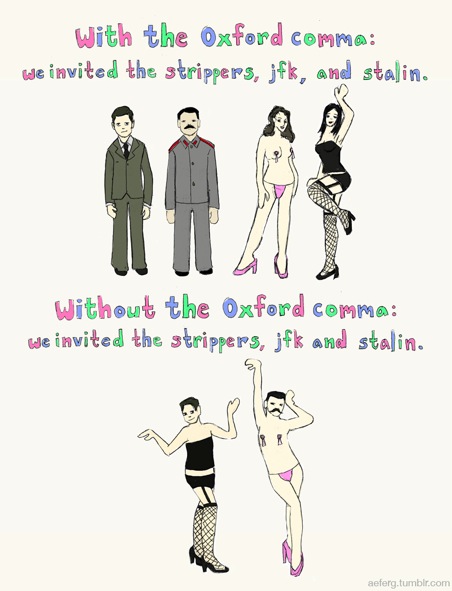
It is very hard to have an adult discussion about distributive justice when the very notion sends some people’s minds sliding down slippery slopes to Hitler and Stalin (see yesterday on the ad stalinem). A recent exchange illustrates this point.  Last month, fellow Chicagoan Harold Pollack wrote a reply to Greg Mankiw’s defense of the 1 percent. Pollack argued for some version of distributive justice. This prompted the following comment from John Goodman, health care policy person:
In some ways this is all very surprising. After all, the 20th century was the century of collectivism. It was the century of communism, socialism, national socialism (fascism) and the welfare state. Each and every one of these isms was devoted to taking from some and giving to others. After all these years and all that misery you would think that someone, somewhere would have perfected an argument for forcible redistribution of income. And yet what we find today at the leftwing blogs is truly pitiful.
I have said this before, but it bears repeating. The left is intellectually bankrupt. It has been that way for almost a half century.
Sorry, but this is moronic and just a bit insulting, as Pollack himself notes in a comment on the post:
“In some ways this is all very surprising. After all, the 20th century was the century of collectivism. It was the century of communism, socialism, national socialism (fascism) and the welfare state. Each and every one of these isms was devoted to taking from some and giving to others. After all these years and all that misery you would think that someone, somewhere would have perfected an argument for forcible redistribution of income….â€
Having grown up with refuseniks and the children of holocaust survivors victimized by the first three isms you mention, I find this crude paragraph especially insulting. Social democracies and liberal welfare states–whatever faults they may have–should not be likened to to criminal authoritarian regimes. That’s not the way to conduct reasonable political discourse. Harold Pollack
That bolded sentiment is exactly right. Goodman, ever clueless, responds:
Harold makes a point that deserves a thoughtful response.
I do indeed see all the collectivist isms of the 20th century as forming a continuum. Some were more brutal than others in practice of course — a lot more brutal. But ideologically speaking, the differences among them are differences of degree, not of kind.
This is how people in the 20th century also saw things. Roosevelt, Stalin and Hitler all believed they were more ideologically similar to each other than to classical liberalism. In fact for all three, the principal philosophical enemy was liberalism. This is also how Woodrow Wilson and other progressives thought. (See Jonah Goldberg’s lay history of the early 20th century progressives for a very readable summary.)
Also, this is the way they thought in the universities.
It’s a slippery slope, he insists (also, Jonah Goldberg, seriously?). Pollack replies:
My last comment on this unfortunate thread. The distinction between the first three isms and the rest resides in institutions which respect political liberty, the rule of law, checks and balances, and other features of constitutional democracy. The U.S., Sweden, Britain, France, and year-2013 Germany have these institutions, laws, practices, and political norms. Nazi Germany, the USSR, and many other authoritarian regimes of the right and left did not.
That was nice of Pollack to try one more time, but Goodman’s entire approach is a textbook slippery slope to Communism and Hitler. I don’t know if any more refutation is necessary.