All posts by John Casey

Blogger

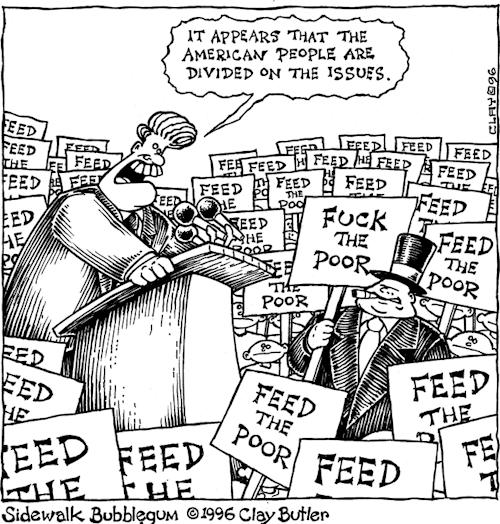
F**k logic, get votes

In a recent interview, George Lakoff, author of Don’t Think of an Elephant, highlights (again) his well-known disregard for “logic.”

To liberals, a lot of conservative thinking seems like a failure of logic: why would a conservative be against equal rights for women and yet despise the poor, when to liberate women into the world of work would create more wealth, meaning less poverty? And yet we instinctively understand those as features of the conservative worldview, and rightly so.

The nurturant-family model is the progressive view: in it, the ideals are empathy, interdependence, co-operation, communication, authority that is legitimate and proves its legitimacy with its openness to interrogation. “The world that the nurturant parent seeks to create has exactly the opposite properties,” Lakoff writes in Moral Politics. As progressives identify failures of logic in the conservative position, so it works the other way round (one of Lakoff’s examples: “How can liberals support federal funding for Aids research and treatment, while promoting the spread of Aids by sanctioning sexual behaviour that leads to Aids?”).

Lakoff seems to be arguing that logic is not essential to political disagreement because each side thinks the other to have failed at logic in some way.  What you need to do is highlight the strengths of your position:

 It’s about time progressives got out there and said what’s true about themselves, as well as what’s true of the other side. If you have a strong position, let’s hear it.

Point taken (maybe) about the adopting an exclusively critical position, but, I wonder, what sorts of things make your position “strong”?  Could it be that your position accords with reality, overcomes relevant objections, etc.?  It’s “logical” in other words?

If I’m not mistaken, Why We Argue has a chapter on this very issue (featuring Lakoff!).

In perfect harmony

According to some recent reports, Glenn Beck, self-described super troll, has expressed remorse over the Godwin-themed clown show that enriched him.  I don’t believe him.  Here’s his reaction to the multilingual and multicultural Coca-Cola ad during last Sunday’s Super Bowl:

“So somebody tweeted last night and said, ‘Glenn, what did you think of the Coke ad?’ And I said, ‘Why did you need that to divide us politically?’ Because that’s all this ad is,” Glenn said. “It’s in your face, and if you don’t like it, if you’re offended by it, you’re a racist. If you do like it, you’re for immigration. You’re for progress. That’s all this is: To divide people. Remember when Coke used to do the thing on the top and they would all hold hands? Now it’s, have a Coke and we’ll divide you.”

What kind of divisions are we talking about?  Here’s one from a Fox News type:

So was Coca-Cola saying America is beautiful because new immigrants don’t learn to speak English?

And there are more, of course.  The logic of Beck’s argument is a marvel, however.  I’m not sure how to reconstruct it, but here goes: People disagree about stuff, among this stuff is immigration, if I mention something related to immigration, and drive racists into a racist frenzy, then I’m dividing us by reminding others of their racism.  So I’m the real racist, or something.

Maybe, however, I want to be divided from people who cannot stomach the very sound of Spanish (or English, Keres Pueblo, Tagalog, Hindi, Senegalese French, or Hebrew) in America.

Keeping up with the Godwins

“Godwin’s Blog” ought to exist (probably does actually).  If it did, hardly an hour would go by without something to write about.  Here’s novelist Danielle Steel’s ex-husband’s letter to the editor of The Wall Street Journal comparing criticism of income inequality with Kristallnacht :

Regarding your editorial “Censors on Campus” (Jan. 18): Writing from the epicenter of progressive thought, San Francisco, I would call attention to the parallels of fascist Nazi Germany to its war on its “one percent,” namely its Jews, to the progressive war on the American one percent, namely the “rich.”

From the Occupy movement to the demonization of the rich embedded in virtually every word of our local newspaper, the San Francisco Chronicle, I perceive a rising tide of hatred of the successful one percent. There is outraged public reaction to the Google buses carrying technology workers from the city to the peninsula high-tech companies which employ them. We have outrage over the rising real-estate prices which these “techno geeks” can pay. We have, for example, libelous and cruel attacks in the Chronicle on our number-one celebrity, the author Danielle Steel, alleging that she is a “snob” despite the millions she has spent on our city’s homeless and mentally ill over the past decades.

This is a very dangerous drift in our American thinking. Kristallnacht was unthinkable in 1930; is its descendant “progressive” radicalism unthinkable now?

Tom Perkins

San Francisco

Mr. Perkins is a founder of Kleiner Perkins Caufield & Byers.

Yes, it’s unthinkable now, because, in part, this comparison makes no sense.

The ad hitlerum manqué

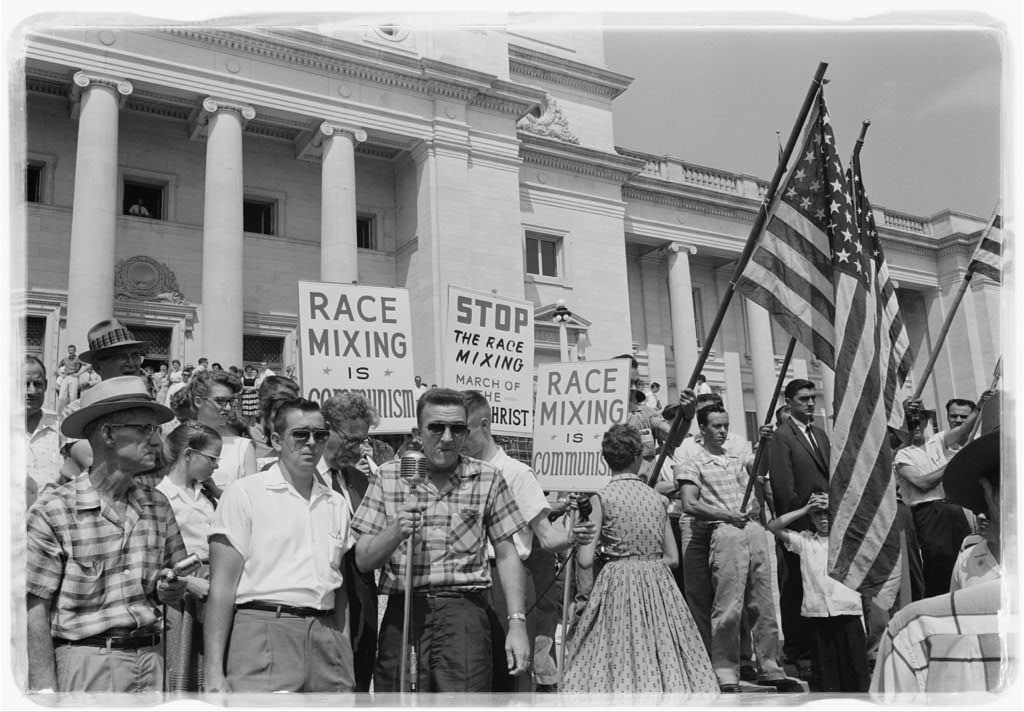
Image 1: Analogy to a pro-gay marriage rally

The Nevada Coalition for the Protection of Marriage is my nomination for the first Glenn Beck Award for WTF Analogies.  Just as Glenn Beck recently argued that science education advocate Bill Nye is like the Catholic Church in his rejection of teaching Creationism in public school science classes, the Nevada Coalition argues that homosexuals are like white supremacists in their desire to change the definition of marriage.  Monte Stewart, their attorney, argues (via ThinkProgress):

On closer examination, this strategy reveals something deeply troubling. White supremacists engrafted the anti-miscegenation rules onto the marriage institution — and thereby altered marriage from how it had existed at common law and throughout the millennia — to bend that institution into the new and foreign role of inculcating white supremacist doctrines into the consciousness of the people generally. Because of the profound teaching, forming, and transforming power that fundamental social institutions like marriage have over all of us, this evil strategy undoubtedly worked effectively for decades.

Question: Where does one see today a similar massive political effort to profoundly change the marriage institution in order to bend it into a new and foreign role, one in important ways at odds with its ancient and essential roles? Answer: The genderless marriage movement. The big difference, of course, is the immorality of the effort to advance the white supremacist dogma compared to the morality of the effort to advance the social well-being and individual worth of gay men and lesbians. Whether that moral objective is sufficiently weighty to justify so bending and altering the marriage institution is for the free, open, democratic process to decide. Certainly, the comparison of laws that protect the man-woman meaning of marriage to anti-miscegenation laws is a false analogy that provides no basis for any court to mandate the redefinition of marriage.

Yes, that is a big difference.  It’s such a big difference, that I wonder why Mr.Stewart decided to compare the two.  This is just like what the Nazis did, only you’re not Nazis and it’s not like what they did.  Perhaps we need a name for this move: let’s call it the ad hitlerum manqué.

Thunderbolt and lightning, Very, very frightening me.

Here is Glenn Beck, as self-described rodeo clown, i.e., troll, on Bill Nye the Science Guy’s advocacy of scientific literacy:

. . . .Or Bill Nye the Science Guy, who said teaching creationism is just dangerous and not appropriate for children!

BILL NYE: And I say to the grownups, if you want to deny evolution and live in your world that’s completely inconsistent with everything we observe in the universe, that’s fine, but don’t make your kids do it because we need them.

How’s he going to look? Is he going to look like the people who threw Galileo up?

It would be hard to make this analogy worse.  Any takers?  There’s good money in this kind of thing, apparently.

You can’t do what Jesus can do

Kevin O’Leary, co-host of the “Lang and O’Leary Exchange” on Canadian television, has an interesting argument for why it’s good that the richest 85 families control the same amount of wealth as the poorest 3.5 billion people.   From Talking Points Memo:

“It’s fantastic and this is a great thing because it inspires everybody, gets them motivation to look up to the one percent and say, ‘I want to become one of those people, I’m going to fight hard to get up to the top,’” he said. “This is fantastic news and of course I applaud it. What can be wrong with this?”

I think striving is great and it’s good to have role models (and I doubt anyone is denying this), but these particular role models (even the one percent on his expanded version) are very far from being meaningful.  It’s somewhat like asking what Jesus would do:  Chances are, it’s beyond your capabilities.

Look for the helpers

Helping

Disagreements are scary things sometimes: people yelling, accusing, abusing.  What to do? I recommend turning to Mr.Rogers:

“When I was a boy and I would see scary things in the news, my mother would say to me, ‘Look for the helpers. You will always find people who are helping.”

Inspired by one of Scott’s comments the other day, let’s call this the “helpfulness objective.”  The HO ought, like the principle of charity, to guide one’s discursive interaction.  It’s fine to be critical (jeez, that’s what we do here all of the time), but the objective of criticism ought to be the improvement of the overall quality of our arguments.  After all, we come into arguments with an objective: demonstrating the correctness of our position.  If we fail in this, then we need improvement; if others fail, they need it.

Here’s a good example of the HO in action from Mike Konczal at the Washington Post’s Wonkblog:

Perhaps some of these programs should be discontinued, or expanded, or turned into straight cash. (How about cash instead of food stamps?) But we can’t have a productive conversation unless we make it clear what the government is, and is not, doing. And it is spending a lot less on welfare than conservatives claim, and getting fantastic results for what it does spend.

What is critical here is the opener (“let’s have a productive conversation”), rather than the closer (“are they lying or stupid?”).  Nice work.  Here’s to the HO.

Outrageous, egregious, preposterous

balance

I’ve long maintained that there is a fallacy gap between right and left.  Major right-leaning pundits (Will, Krauthammer, Brooks, and the legions of Am Spec bloggers) far exceed left-leaning pundits (Krugman, E.J.Dionne, and who else is there?) in basic philosophy 101-style argumentative terribleness.

The only evidence I have is my unscientific observations over the past nine or so years.  For some, this view cannot possibly be correct, since “both sides do it” is a logical and metaphysical fact.  It isn’t.  But the fact that most people think this forces any treatment of fallacies, over-the-top rhetoric, etc., to insist on a balance which isn’t there.  Provide your own examples.

Now there is some, but only some, empirical support for my thesis.  Professors  Jeffrey Berry (Political Science) and Sarah Sobieraj (Sociology) of Tufts have written The Outrage Industry: Political Opinion Media and the New Incivility, which takes an empirical perspective on over-the-top political rhetoric.  In an article in Politico, they write:

That said, the data from our analysis still show that the liberal outrage media is no match for the conservative side. Looking at low levels of outrage—say, two to five incidents per episode—we found that left- and right-leaning programs and blogs were roughly equal. However, as the number of outrage incidents per episode or post increased, the source was more and more likely to be conservative. This is most visible at the far end of the spectrum: The most outrageous cases (with 50 or more incidents per episode or post) come almost exclusively from conservative sources.

The outrage measure is itself kind of an interesting notion. But I’ll leave that for another time. In the meantime, check out the article (see if you can spot the balance-mongering!), and the book.

Replace and defend

Deep Insights

A follow up on David Brooks’ piece on the inadvisability of marijuana legalization.  Perhaps you’ll recall that Brooks told a very personal tale of his own adolescent adventure with marijuana.  TL;DR: marijuana should remain illegal (also because of nature and the arts). A charitable reading of this argument would go thusly: Brooks himself continues to pull tubes, with the consequence being that his arguments are terrible, so don’t legalize marijuana, lest you end up a bumbling fool like David Brooks.  He kind of says as much:

I think we gave it up, first, because we each had had a few embarrassing incidents. Stoned people do stupid things (that’s basically the point). I smoked one day during lunch and then had to give a presentation in English class. I stumbled through it, incapable of putting together simple phrases, feeling like a total loser. It is still one of those embarrassing memories that pop up unbidden at 4 in the morning.

I’m still embarrassed for him.  In any case, rushing to his defense is the allegedly unstoned Reihan Salam, of the National Review (via Lawyers, Guns, and Money).  His argument is the perfect iron man.

The column has prompted an ungenerous and largely uncomprehending response from people who are attacking David as a hypocrite, and worse. But you’ll notice, if you know how to read, that Brooks isn’t endorsing draconian legal penalties for marijuana use. Rather, he is suggesting that legalization as such might not be the best way forward. Though I imagine I don’t agree with Brooks in every respect on this issue, I think his bottom line is correct. The goal of marijuana regulation, and the goal of alcohol regulation and casino regulation and the regulation various other vices, ought to be striking a balance between protecting individual freedom while also protecting vulnerable people from making choices that can irreparably damage their lives and the lives of those closest to them.

This fellow has just made up an entirely different argument: Brooks did not argue for regulation of marijuana.  Nor, in fact, does his column even suggest this.  Nor would any sane (non stoned libertarian) argue for unregulated legalization.  Just for reference, here’s how the obviously stoned David Brooks characterizes legalization:

We now have a couple states — Colorado and Washington — that have gone into the business of effectively encouraging drug use. By making weed legal, they are creating a situation in which the price will drop substantially. One RAND study suggests that prices could plummet by up to 90 percent, before taxes and such. As prices drop and legal fears go away, usage is bound to increase. This is simple economics, and it is confirmed by much research. Colorado and Washington, in other words, are producing more users.

Yet, according to Salam, Brooks is not arguing against legalization.  So this is a beautiful example of argument defense by complete replacement: when the argument you need to defend really sucks, no matter: replace it with a completely different argument, then accuse your opponents of straw manning.  It’s a double fallacy.

Question for the readership then: must the iron man always involve a straw man?  Seems like it might.  In strengthening an argument beyond what it deserves, I distort the critics’ view of the argument as weak.

David Brooks has taken it easy for all of us sinners

Our dystopian future

John Holbo at Crooked Timber reads David Brooks’ recent column on marijuana and has a request we’ve had for a long time:

Why is this interesting? I’ve said it before, and this column is a good example.In US politics, the conservative imagination is so loopily half-utopian. Prominent liberal pundits, by contrast, don’t go in for this sort of half-baked (no pun intended!) goofiness. (Maybe that’s why they don’t get invited onto the Sunday morning shows. They are less entertaining.) But maybe this is just my liberal bias. A challenge for our conservatives readers. Can you provide examples of liberal pundits who are as prominent as Brooks, who are as goofy as Brooks?That is, they defend some concrete policy proposal by sort of half-flying off to some vague Cloud Cuckooland, based on principles they would never seriously propose ratifying in the real world, because they obviously don’t even believe those principles?

As an empirical matter, I think Holbo is right on the money.  We have, on the one hand, a very vibrant argumentative culture in the United States; you don’t have to go very far to find vigorous dialectical exchanges on any number of topics (see, the Internet).  At the same time, however, this culture is dominated by the likes of Brooks (and Kathleen Parker).

Brooks, the particular case at hand, argues the following:

For a little while in my teenage years, my friends and I smoked marijuana. It was fun. I have some fond memories of us all being silly together. I think those moments of uninhibited frolic deepened our friendships.

Only to conclude:

The people who debate these policy changes usually cite the health risks users would face or the tax revenues the state might realize. Many people these days shy away from talk about the moral status of drug use because that would imply that one sort of life you might choose is better than another sort of life.

But, of course, these are the core questions: Laws profoundly mold culture, so what sort of community do we want our laws to nurture? What sort of individuals and behaviors do our governments want to encourage? I’d say that in healthy societies government wants to subtly tip the scale to favor temperate, prudent, self-governing citizenship. In those societies, government subtly encourages the highest pleasures, like enjoying the arts or being in nature, and discourages lesser pleasures, like being stoned.

In legalizing weed, citizens of Colorado are, indeed, enhancing individual freedom. But they are also nurturing a moral ecology in which it is a bit harder to be the sort of person most of us want to be.

Skipping the obvious rejoinder of the legality of alchohol and workahol, smoking weed was good for Brooks, morally good actually (it deepened his friendships, didn’t it?), but it ought to be illegal for others (with, I imagine, all of the consequences of being illegal–jail, fines, war on drugs, etc.) because nature and the arts are better.  I think you’d have to be high to cite those two particular examples of alternatives to weed.  And so maybe we’re reading this all wrong.  Brooks is enacting his argument against  legal weed by getting high before writing it.