Don’t have a reply? Go Meta

Representative Diane Black (R-TN) was on the PBS News Hour on Friday defending the new TrumpCare bill making its way through Congress.  The bill’s getting criticism from both the Left and the Right.  In particular, host Judy Woodruff asked Black about how the bill’s supporters answer the objection from  Small Government Republicans that TrumpCare is yet another entitlement program, because it provides refundable tax credits.

JUDY WOODRUFF: But, as you know, your conservative colleagues are saying they see it’s a government guarantee and they don’t like it.

REP. DIANE BLACK: Well, they have that opportunity to make those comments and make their points.

And that’s what the whole process is about. That’s the great thing about being in the legislature, is a lot of good discussion and sometimes really heavy conversations. But I think, at the end of the day, that you’re going to see that this bill is going to be successful, and that’s because our health care system right now is failing.

But that’s not an answer to an objection.  That’s the promise that there will be a discussion where the objection can be posed.  Not what the answer will be to it.

Aristotle called this kind of move ‘ignorance of the nature of refutation’ — that in order to reply to a challenge, one must provide not only an argument, but one that addresses the issue instead of establishing (perhaps well) another point.  Hence ignoratio elenchi, ignoring the argument.

In this case, Black’s strategy is to make a reasonable point about the process of argument, but proposing that the reasonable point about the process stands in for a reasonable case for a particular product.  And so, going meta, saying that we’ll have a fair conversation about this, is used as some reason to think that a particular view is defended.

The follow-up argument, by the way, that the bill will pass because the health care system is failing, is a false dilemma.  In fact, those who criticize the bill hold that a DIFFERENT bill would be a better third option.


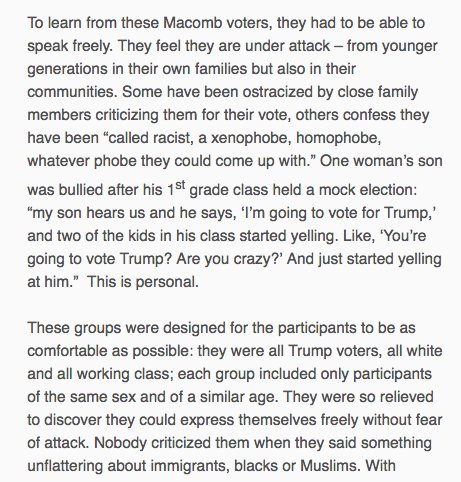
Shut up and listen

Image result for shut up and listen

The following passage (borrowed from a twitter feed) is very suggestive:


We can all get a good chuckle about how these precious snowflakes need a safe space.

I imagine there’s some value in people being able to say things without having to worry about being evaluated (which is what “racist” is). This is what rough drafts are for.

But rough drafts also serve another purpose: to elicit cheap criticism in a low-stakes environment. You can’t forget that part.

If you do, then you’re just talking and making other people listen. What’s the point of that?


Argumentum ad argumenti longinquitatem

Time is short, folks. We don’t have all day to sit around and listen to arguments and puzzle through scholastic distinctions. Perhaps for this reason, some genius has come up with a new form of refutation:

“your argument is too long; mine is better because it’s shorter”

Here’s a recent version:


The length of such bills has been an argument against health care reform since 1993. We talked about this argument (in 2009) here.

I think it’s obvious (is it not?) that the length of our arguings have no direct relation to their quality. It’s not even a pragmatic indicator. Perhaps it even goes the other way. The longer an argument, the more likely it’ll be better (or address your objections!).

Anyhoo. What to call it? Sticking the with the Latinism popular among fallacy theorists: argumentum ad argumenti longinquitatem (argument against the length of an argument). Even the name of the fallacy is long. Get it?

Desperate but not Serious

In sauce that’s good for the goose is good for the gander news, Bill Kristol’s editorial at The Weekly Standard,Critical but not Serious” reads like a list of great moments of schadenfreude for the Left.  He identifies the problem for the Democrats:

The left isn’t serious. It’s in meltdown—but as resistant as ever to serious reflection on why. It’s been in the driver’s seat for so long, culturally and institutionally, and it so enjoyed its eight years of control of the White House that it can’t now come to serious grips with its critical situation. After all, if you’ve got a lot of faith in History, and if the arc of History now bends toward Trump—what’s a progressive to do?

OK, so the Left isn’t serious, and the Democratic Party has a huge political challenge ahead of it, and they’ve only got their intransigence to rely on.  That, surely, gives Kristol the deep tingly schadenfreudens!  OK, so how does it look for thoughtful and serious Republicans?

For those committed to constitutional government as opposed to administrative control, to self-government as opposed to the nanny state, to free markets as opposed to centralized power, and to strength and leadership abroad as opposed to weakness and retreat, the Republican party has been the organization (more or less) seriously advancing these principles.

Is it still? It’s true that Donald Trump, no adherent to traditional Republicanism, managed to effect a hostile takeover of the party at the presidential level in 2016. President Trump is a problem for Republicans seeking to be serious; a problem sufficient, perhaps, to prevent much that is serious from being achieved in the next four years.

Oh, that sounds bad, too.  If only Republicans had control of, say, one or two houses of government.  Then they could, you know, move forward with their thoughtful legislative agenda.  Or exercise some control over the overrreach of a President they don’t agree with.  That would take, you know, a serious person.  But, as Kristol sees it, that’s politically impossible.

The spirit of our age is hostile to serious men. That spirit is a strange combination of cynicism and hysteria, of irony and bombast. It would be soberly inspiring if some in the Republican party would stand up against that spirit and show themselves to be the hommes sérieux of our time.

Yes, but, you see, the fact that one must make such a rallying cry is evidence that no such people have (or are likely to) show themselves.  But if it’s not the case, one can always just say it’s “the spirit of our age” that prevented such people from coming forward.

Notice the double standard of the situation here.  And notice that the Democrats have plenty of people who’ve come out to criticize and resist the Trump agenda on the basis of their conscience.  That’s not serious by Kristol’s lights (for whatever reason); however, Paul Ryan and Mitch McConnell have positions of leading Congress, and they seem too afraid of the President to do anything.  Kristol’s view is: The Zeitgeist Diddit. 

Scumbag Teacher Meme

The scumbag teacher meme is one of the classic tu quoque memes on the internet.  It’s regularly: won’t accept late work, but takes forever to return papers; berates students for wasting time, but chats with students about stuff through class; has a Ph.D., but uses ‘irregardless’.  There are other non-tu quoque versions, too, like requires that you learn cursive, cancels class just 5 minutes before or with a note on the door, requires an expensive but never used textbook.  Most of the instances are misunderstandings about how education works and why teachers need more support (and more pay), but they are stand-ins for some frustration folks have with the current educational climate.

In a new instance of the scumbag teacher meme move, Jim Geraghty at NRO has an objection to how the Day without a Woman Protest is affecting schools.  You see, because so many women are teachers in the Alexandria schools, they ‘ve had to cancel school for a ‘teacher work day’.  Geraghty then identifies the troubles facing the schools:

Alexandria’s public schools underperform the statewide average in subject after subject. In the 2015–16 school year, 80 percent of Virginia students passed English proficiency exams; 73 percent of students in Alexandria did. In math, 80 percent statewide passed; 68 percent of Alexandria students did. Statewide, 77 percent of students passed a test of writing proficiency; 69 percent of Alexandria students did. In history, 86 percent of students passed statewide; 77 percent of Alexandria students did. In science, 83 percent of students statewide passed; 69 percent of Alexandria students did.. . .
[T]he ills that plague Alexandria schools and, indeed, schools around the country… [are] unlikely to be solved by “A Day Without a Woman.”

Here it is in a meme:

Here’s Geragthy’s final analysis:

Apparently, they’ve decided that standing up to the sexist menace across the river in Washington and nationwide is more important to them than doing their actual jobs. It’s a shame they aren’t more concerned with the tangible problems those jobs present every day.
But the trouble is that people can walk and chew gum at the same time.  Teachers can be worried about X and it can be at the top of their priority list, but they can also be worried about Y and Z, too.  And that means that they can even make some room to do Y and Z, too.  John had a nice observation about this a few weeks back with the ‘think of the children‘ trope.  In  this case, however, it’s a case of a red herring of assessing the importance of X with the greater importance of Y.
Another way to see this would be as an instance of a perfectionist’s false dilemma, or as John termed it a few years back, argumentum ad imperfectionem.  That it would be preferable for teachers to be in class for every day of scheduled school is correct, but this is not a perfect world.  And teachers are at liberty to use their personal days as they see fit.  That they all use them on the same day for a political purpose, well, is in an important way, exactly the point they were trying to make.

The debriefing paradigm

Image result for trump cartoons twitter

Readers will be familiar with this weekend’s POTUS tweet accusing former President Obama of authorizing wiretaps of Trump Tower. The controversy surrounding these tweets regarded the apparent baselessness of the claim (or its apparent base in Brietbart news). As of this AM (as far as I know) the POTUS has refused to offer clarification on the question of the basis of his claim.  Background here in case you’re behind.

This hasn’t stopped his court followers from coming out to iron man his claim. This is a pattern we’ve seen before. Trump says something manifestly false or outrageous, then come people to interpret what he says to sound more reasonable than it actually was. That’s the iron man. What differentiates Trump from, say, Palin is that she had the sense (or lack thereof) to shut up about it after (usually). Trump tends to reject the iron man version of his view. It’s what makes him strong and decisive.

Here’s another variation on Trump’s strategy:

I have learned that some — though definitely not all — members of President Trump’s inner circle share his belief that the Obama administration tapped his Trump Tower phones in October. And a White House official told me President Trump not only doesn’t regret this weekend’s fracas despite the lack of evidence for his astonishing claim, he is “absolutely convinced” he’ll be vindicated.

“The president just has a great nose for these things,” the official said. “It’s the bureaucratic leaks — the deep state — that bother him most. Even if it turns out not to be true that they surveilled Trump Tower, he will have a very good point to make about the level of sabotage coming from Obama holdovers.”

This, by the way, is a variation on “spitballing,” identified by Talisse and Aikin at 3quarksdaily and discussed again here.

But there’s a parallel to another interesting case of epistemic failure.

Contrary to the what the source above says, Trump will not, of course, have a good point to make in any epistemically meaningful sense: he didn’t offer any relevant evidence (and apparently doesn’t have any, note the “if”). What’s amazing, however, is that the destruction of the basing belief here (the wiretap) doesn’t seem to undermine the case at all in the mind of the source. Such a failure at belief revision has long baffled psychologists. You can read about that here.

It runs basically like this. You give people a false belief on purpose, then you tell them that you gave them a false belief. Then you ask whether they continue to believe the false belief. Oddly, and sadly, they usually do. This explains, I think, the basic strategy of spitballing Trump-style: say a bunch of false things because once they’re out there and people believe them, they will continue to do so in the face of fact checking, even of the most direct variety.

Prezza-Denchal

When your kids finally act like members of the human species over dinner, you go out of your way to compliment them.  How grown up they’ve been!  When the dog that will jump and hump any goddam leg in range keeps to himself for a minute while guests are over, you praise him.  What a good boy!  Why? Because you want to encourage further good behavior and you’ve been trained to put up with bad behavior.

And so when the kids and dogs do what they are supposed to do,  you act like they are friggin’ saints.  And then they think that they deserve praise for doing the minimum.  (Chris Rock had a fabulous version of this insight – but it’s got some… uh… language.)

Well, you know where this is going.  President Trump’s address to the Joint Session of Congress did not involve any egregious lapses of rhetorical judgment, overt antagonism or any ad-libbed lines beginning with ‘believe me…’.  It was still filled with dopey lines like, promoting “clear water” (just after ordering the repeal of the CleanWater Rule), and “We just need the courage to share the dreams that fill our hearts.”  And “And a new surge of optimism is placing impossible dreams firmly within our grasp.”  Yeech.

Moreover, Trump’s speech was all over the place argumentatively.  Just take for example the fact that he rebukes the Democrats with the line

The time for small thinking is over. The time for trivial fights is behind us.

But then he just rolls into the cadence-windup for the big finish.  Not a well-written or well-delivered speech.  Not inspiring or clear about what or how things will be done.  But not an hour of blustery windbaggery or braggadocio.  He stopped being the cartoon villain. And so the pundits fell all over themselves with praise:

He became President of the United States in that moment. Period.

Said Van Jones on CNN.  Tom Brokaw said his presentation was

Tonight, this is easily the most Presidential he’s been.

And that’s just the media folks.  Breitbartians have been reporting that there has been a wave of “positive reaction” to the speech.  And so that’s where we are, folks.  We’ve gone from Obama’s standard to just being Presidential.


Season of the Godwin

Godwin’s Law is, roughly, that as a political discussion proceeds, the likelihood of an analogy to Hitler increases.  Long discussions have it as a relative certainty that Hitler, Stalin, Mao, or Mussolini references will not only happen but perhaps multiply. (We’ve done a number of bits on Godwining here at the NS.  I’ve tried a reconstruction of the argument form here.)

Enter our favorite Orange Furher-analogue and the variety of ways folks have made the argument.  There’s the nationalism, the militarism, the authoritarian style, threatening the free press, the racism.  And there’s the fact that even his supporters holler out ‘Heil Trump.’   So much to work with!

It’s worth paying attention to a small difference in argument criticism here — you can criticize an argument against some claim or individual without really defending the claim or person.  That is, you don’t have to be a Trump sympathizer to think that some analogies between him and Hitler are off base.  You’ve just got to think that this analogy isn’t quite right.  (See John’s older post about how to evade in these lights.)

David Harsanyi at NRO has a bit of argument criticism with the wide phenomenon Godwining/Ad Hitlering with our Great Orange Leader.   He has one line of argument that there are bad consequences to the overuse of Ad Hitlerum:

Comparing everything to 1933 is now a big part of our national discourse, not only that of angry partisans but also that of people who should know better than to habitually make these correlations. This isn’t Mel Brooks’s Springtime for Hitler. Whether you’re a fan or a detractor of Trump, these gross false equivalencies belittle the memory of millions who died in unimaginably horrifying ways. Moreover, exaggeration and historical illiteracy undermine the very cause these people claim to care about, unless that cause is desensitizing people to the terror of the Holocaust.

Well, we have to note that the argument here depends on the analogies being false.  So the main line of argument, then, depends on the case that there are relevant dissimiliarities between Trump and Hitler.  Here’s how Harsanyi breaks the analogies when they come to deportation:

[E]ven if the authorities . . . were to start deporting illegal immigrants, not one of those unfortunate people would ever be sent to anything resembling the ovens of Treblinka and Auschwitz. Not their children. Not anyone else in this country. Most often, in fact, deported illegal immigrants, who have broken the law, are going back to their home in Mexico, where they can often apply for legal entry into the United States.

Two things.  First, the Jews weren’t sent straight to the ovens.  They were sent to internment camps, which were billed to the rest of Germany is pretty nice places.  Second, given the way the laws were sold to the public, they don’t sound like matters of targeting illegal immigration, but are more matters of ethnic or religious identity.  It’s that part that merits the Hitler analogies, not whether the consequences are nicer or not.   That the policies could be worse (as in exactly like Hitler’s policies) is a very weak defense.  And, again, as we’ve said many times: analogies are not identities.

What to think

Image result

We saw yesterday (post here), that Mika Brzezinski , cohost of Morning Joe, said that it’s the media’s job “actually control exactly what people think.” She obviously didn’t mean that, some people jumped on it anyway. Here’s another example of lapsus profiteering (I’ll find a better name).

Today let’s think for a second about the phrase “telling people what to think” and its cognates. I bring this up because sometime today at CPAC, Betsy DeVos, the new Secretary of Education, filed, for the nth time, the complaint that universities “tell people what to think.”  From the Chronicle of Higher Education:

“The faculty, from adjunct professors to deans, tell you what to do, what to say, and more ominously, what to think. They say that if you voted for Donald Trump, you’re a threat to the university community,” read the remarks. “But the real threat is silencing the First Amendment rights of people with whom you disagree.”

Teaching is pretty challenging. You have to deal, in the first place, with people who are not your epistemic peers. This means they know less than you do. As a result you seem pretty pedantic much of the time and pretty much anything you do with them in class will involve telling them what to think. For instance: don’t generalize from marginal cases; don’t straw man people you’re arguing with; and don’t base your argument on vague and equivocal terminology, like “think” (in the above case). Now naturally I’ll give reasons for their thinking this. But I’m still telling them what to think. That charge is inescapable because, and I’m telling you what to think again, vacuous.

Yes, of course she means to dust off the old one about “indoctrination” and the like. Well, while we’re lazily advancing tropes, here’s one of my own. I’ve tried and tried to indoctrinate my students into not using the passive voice –yet it still gets used! How successful will I be in getting them to accept the subtleties of my modified version of Rawls’ theory of justice?

Your argument is invalid