All posts by John Casey

Blogger

I don’t have evidence to back that up

The work of Timothy McVeigh, Islamic Extremist

The FBI and I don’t know who planted the bombs in Boston.  Nor does Susan Collins, Senator from Maine.  She, however, is willing to speculate (from Dave Weigel at Slate):

“Whenever we have an attack like this it’s difficult not to think that it’s somehow involved in Islamic extremism,” said Maine Sen. Susan Collins, until recently a top member of the Homeland Security committee and still a prime mover on security bills. “I don’t have evidence to back that up. That’s just based on previous attacks.”

This is really dumb–“based on previous attacks” is evidence.  Really bad evidence.  Via Ballon Juice:

Except maybe here, here, here, here, here and here.

Maybe there ought to be some kind of history test for Senator.

The old ball and chain

Fig. 1: Marriage

A playground loser may save his ego with the following: I didn’t want to win anyway.  Here’s Yale Professor David Brooks’ latest version.

But last week saw a setback for the forces of maximum freedom. A representative of millions of gays and lesbians went to the Supreme Court and asked the court to help put limits on their own freedom of choice. They asked for marriage.

Marriage is one of those institutions — along with religion and military service — that restricts freedom. Marriage is about making a commitment that binds you for decades to come. It narrows your options on how you will spend your time, money and attention.

Whether they understood it or not, the gays and lesbians represented at the court committed themselves to a certain agenda. They committed themselves to an institution that involves surrendering autonomy. They committed themselves to the idea that these self-restrictions should be reinforced by the state. They committed themselves to the idea that lifestyle choices are not just private affairs but work better when they are embedded in law.

This is correct only in the most restrictive sense–the sense in which every choice to do some activity x involves doing x (and maybe for a time not y).  But in every other meaningful sense it’s appalling dumb: having the right to marry recognized involves adding choices to one’s life.

El milagro de los milagros

A viewer of televangelist Pat Robertson’s 700 Club asked an obvious but important question about Miracles.  Here it is (via Raw Story via Reddit):

On Monday’s episode of CBN’s The 700 Club, Robertson responded to a viewer who wanted to know why “amazing miracles (people raised from the dead, blind eyes open, lame people walking) happen with great frequency in places like Africa, and not here in the USA?”

That is a good question.  For one famous answer, see David Hume.  For another answer, listen to Pat Robertson:

“People overseas didn’t go to Ivy League schools,” the TV preacher laughed. “We’re so sophisticated, we think we’ve got everything figured out. We know about evolution, we know about Darwin, we know about all these things that says God isn’t real.”

“We have been inundated with skepticism and secularism,” he conintued. “And overseas, they’re simple, humble. You tell ‘em God loves ‘em and they say, ‘Okay, he loves me.’ You say God will do miracles and they say, ‘Okay, we believe him.’”

“And that’s what God’s looking for. That’s why they have miracles.”

One could argue the reverse ought to be the case: you need a background knowledge of the laws of nature in order to appreciate their violation.  But what does he know, he didn’t live in Africa.

Don’t try this at home

Hunter, writing at the The Daily Kos makes a salient point about iron manning.  Speaking of Ralph Reed, invited just this Sunday to NBC’s Meet the Press to comment on the subject of gay marriage (he commented on the science!), he writes:

Anyway, this all leads to the biggest scientific question of all: Just how shamed and discredited do you have to be before Meet the Press and the Wall Street Journal will stop propping your sorry ass up as someone we all ought to be hearing from? The press is still looking for insights into the moral issues of our time from Ralph Effing Reed? Why?

Here’s a question, however.  Philosophers have long distinguished, perhaps wrongly, between informed discussants and the rest of us.  They argue that since not everyone can pay attention to every single issue, at least in the way required to participate as a fully informed and capable interlocutor, they ought to be kept ignorant of those debates.  Don’t try this at home.

This raises for me a related question.  In light of the fact that not everyone is paying attention, or paying very close attention, to our various Democratic debates, do we not therefore have a special obligation in their regard–a special obligation that we are on our best behavior?  People do not pay close attention to debates over moral or scientific questions, so when you host them and invite them to join, you should perhaps think carefully about what you are going to expose people to.

Slippery coke

Check out this  Brian McFaden Comic (at the Daily Kos):*

Slippery slope

Seems like your standard slippery slope argument to me (in addition to some poignant commentary on how wasteful this particular argument is). We’ve talked about this a lot here–here’s one by Scott from a few weeks ago.  The question there was what distinguishes the slippery slope from the bumpy staircase.

I think of this whenever I walk through the outdoor area separating the building that houses my office from the rest of campus.  It used to be that smokers (such as I once was) would occupy tables in this covered area.  Now the area is off limits to smokers.  I can see a smoker’s argument going something like this:

banning smoking outdoors in this one place will lead to banning smoking outdoors in another place, and eventually to the banning of smoking in all public places on campus.

This is certainly a slippery slope argument, but it doesn’t seem fallacious to me.  There’s no significant conceptual distinction between the various moves.  I imagine the justification is that the University has the right to regulate toxic chemicals on campus.  They only do it piecemeal so as not to shock anyone.  Full disclosure, I look forward to the universal ban.

Back to Bloomberg.  Aside from the general question as to why start with giant soft drinks, this argument seems to be like the smoking argument.  If city government has the power to regulate such things, then there is no conceptual distinction between various other food-related regulations.  There seems in other words to be no relevant difference between the giant softdrink and the megabaconator.  Banning the one is just like banning the other.

*an earlier version mistakenly attributed the comic to Tom Tomorrow.

Work it

Fig.1 Lazy Government Workers

Rogers Ailes, head of Fox News, seems to think that government work makes you lazy (via TPM):

Obama’s the one who never worked a day in his life,” Ailes said in Zev Chafets’ book “Roger Ailes: Off Camera.” “He never earned a penny that wasn’t public money. How many fundraisers does he attend every week? How often does he play basketball and golf? I wish I had that kind of time. He’s lazy, but the media won’t report that.”

And this guy is some kind of evil genius.

A sad repost

Fig. 1: Pocket ChangeIt’s the anniversary of the Iraq War.  If anything, this war ought to teach us that arguments have consequences.  Here is the most recent assessment (according to a recent study):

(Reuters) – The U.S. war in Iraq has cost $1.7 trillion with an additional $490 billion in benefits owed to war veterans, expenses that could grow to more than $6 trillion over the next four decades counting interest, a study released on Thursday said.

The war has killed at least 134,000 Iraqi civilians and may have contributed to the deaths of as many as four times that number, according to the Costs of War Project by the Watson Institute for International Studies at Brown University.

When security forces, insurgents, journalists and humanitarian workers were included, the war’s death toll rose to an estimated 176,000 to 189,000, the study said.

The report, the work of about 30 academics and experts, was published in advance of the 10th anniversary of the U.S.-led invasion of Iraq on March 19, 2003.

Now for some self-plagiarism.  Every now and then I return to Robert Samuelson estimate of the cost of war in Iraq.  At the time, he called it “pocket change.”  He should be reminded of this assessment every single day of his life.  But alas, judging by the columns he has penned since then, he is unaware.   Let’s at least remind ourselves.  Here comes the repost:

For a while–for those who remember–Samuelson been poo-pooing Obama’s “self-indulgence” on health insurance reform.  A more competent rhetorical analyst, by the way, might have fun with the way he always goes ad hominem on Obama–treating his own impoverished and uncharitable image of Obama rather than Obama’s stated positions (he even admitted once that this was his own problem).  But it’s worthwhile to poke fun at Samuelson’s priorities.  Way back before we spent 700 plus billion dollars in Iraq, chasing what turned out to be an easily uncovered deception, here is what Samuelon wrote:

A possible war with Iraq raises many unknowns, but “can we afford it?” is not one of them. People inevitably ask that question, forgetting that the United States has become so wealthy it can wage war almost with pocket change. A war with Iraq would probably cost less than 1 percent of national income (gross domestic product). Americans have grown accustomed to fighting with little economic upset and sacrifice.

Pocket change.  In reflecting on this piece (called “A War We Can Afford”) Samuelson wrote:

Yes, that column made big mistakes. The war has cost far more than I (or almost anyone) anticipated. Still, I defend the column’s central thesis, which remains relevant today: Budget costs should not shape our Iraq policy. Frankly, I don’t know what we should do now. But in considering the various proposals — President Bush’s “surge,” fewer troops or redeployment of those already there — the costs should be a footnote. We ought to focus mostly on what’s best for America’s security.

When it comes things that are actually real, on the other hand, Samuelson is skeptical:

When historians recount the momentous events of recent weeks, they will note a curious coincidence. On March 15, Moody’s Investors Service — the bond rating agency — published a paper warning that the exploding U.S. government debt could cause a downgrade of Treasury bonds. Just six days later, the House of Representatives passed President Obama’s health-care legislation costing $900 billion or so over a decade and worsening an already-bleak budget outlook.

900 billion?  That figure is almost exactly what we’ve spent in seven years of war.  Weird.  But this time cost is all that matters.

Imagine something costing only 900 billion over a decade and killing zero people.

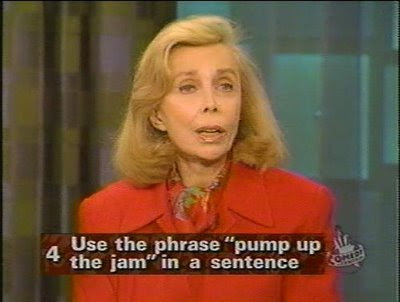
Pump up the jam, pump it up

Fig.1: Pump it up.

Timorous airline passenger and Fox News alleged liberal Juan Williams has admitted to making one of his weekly columns an undergraduate copy paste job.  According to Salon‘s Alex Seitz-Wald:

In a case of apparent plagiarism, Fox News pundit Juan Williams lifted — sometimes word for word — from a Center for American Progress report, without ever attributing the information, for a column he wrote last month for the Hill newspaper.

Almost two weeks after publication, the column was quietly revised online, with many of the sections rewritten or put in quotation marks, and this time citing the CAP report. It also included an editor’s note that read: “This column was revised on March 2, 2013, to include previously-omitted attribution to the Center for American Progress.”

But that editor’s note mentions only the attribution problem, and not the nearly identical wording that was also fixed.

The really strange thing about this case is what it reveals about the writing and thinking process of the two-million dollar a year Fox News pundit:

In a phone interview Thursday evening, Williams pinned the blame on a researcher who he described as a “young man.”

“I was writing a column about the immigration debate and had my researcher look around to see what data existed to pump up this argument and he sent back what I thought were his words and summaries of the data,” Williams told Salon. “I had never seen the CAP report myself, so I didn’t know that the young man had in fact not summarized the data but had taken some of the language from the CAP report.”

Two things.  First, he has an assistant?  I’ve always suspected assistants were behind the obscure factoids and misleading statistics in George Will’s work (full disclosure–someone, I’ll find out later who, made this very same quip, I’m borrowing), but Williams’ defense makes that clear.  Second, and more importantly, Williams confesses to his hacktackular thought process.  He has an idea, then sends someone else out to provide data that “pumps it up.”  It’s almost as if he had reached a conclusion, then dispatched a lackey to find him some premises.  He’s the master chef of ideas, some underpaid assistant can chop up the ideas and cook the facts.

Classic Krugman

Check out this video on Bloomberg.

The story goes something like this.  In the remark shown on the screen, Paul Krugman cautioned that he is not calling someone a name (via a Monty Python reference lost on the speaker), but rather questioning the evidence for his view.  The stunningly clueless commentator remarks that this is “classic Krugman” for “going after a person,” which is greeted with all sorts of agreement from the assembled panel brainless commentators.  She then refers to Niall Ferguson, who in his turn says Paul Krugman uses ad hominem arguments because he must have been abused as a child.  That, of course, is an actual ad hominem; Krugman’s is not.  You just cannot be this dumb.

Reduce, reuse, recyle

Fig.1: Conservativism

Here is a post for those who think that pointing out the inconsistency between a party’s name and its alleged position on an issue constitutes a decisive refutation of their view.  That “conservatives” fail to “conserve” or “preserve” or anything else along those lines does not mean they embody some kind of contradiction.  George Will has used this line on “progressives,” or his army of hollow men in years past.  Here he is the other day:

Progressives are remarkably uninterested in progress. Social Security is 78 years old, and myriad social improvements have added 17 years to life expectancy since 1935, yet progressives insist the program remain frozen, like a fly in amber. Medicare is 48 years old, and the competence and role of medicine have been transformed since 1965, yet progressives cling to Medicare “as we know it.” And they say that the Voting Rights Act, another 48-year-old, must remain unchanged, despite dramatic improvements in race relations.

What kind of move is this?  I think it’s an equivocation–a rather textbook variety.  Clearly “progressive” means something different to “Progressives” (the name a half-hearted attempt at rebranding “liberal,” by the way).  Will’s thought goes something like this:

your name implies you like progress, but here is progress which you don’t like, so you’re not “progressive.”  Your self-understanding therefore is laughably contradictory.

The problem with this is that “progress” (1)–things getting better, more just, etc–and “progress” (2)–things changing–mean different things to alleged “progressives”.  Besides, what is at issue with voting rights is an empirical question: has progress been made on voting rights?  Progressives say, pointing to the recent election, no; (some) conservatives say yes.

*minor edit for clarity.